Tele Vue NP-127is127mm, f/5.2 Refractor  Telescope
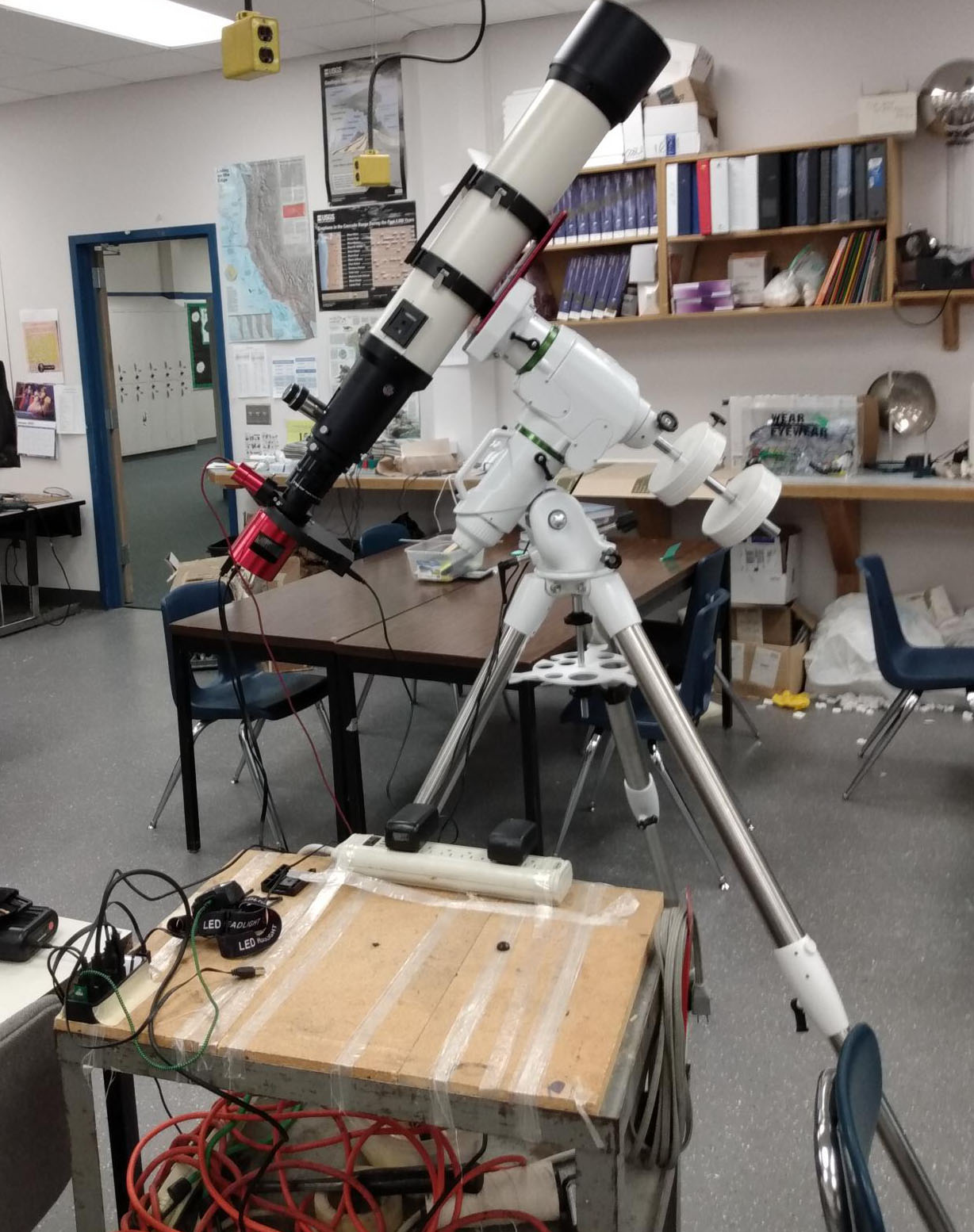
This is our main telescope and we use it primarily for DSO (Deep Sky Observations).

The power of this telescope isn't so much in making distant objects larger, but rather the way it can be so precisely controlled to take very long exposures. Coupled with a specialized astrophotography camera it is capable of producing remarkable images.

In order to take very long exposures, the telescope must track very precisely which requires a number of different pieces of equipment all working together.

EQUIPMENT LIST:

ZWO ASI2600 Monochrome Astrophotography Camera
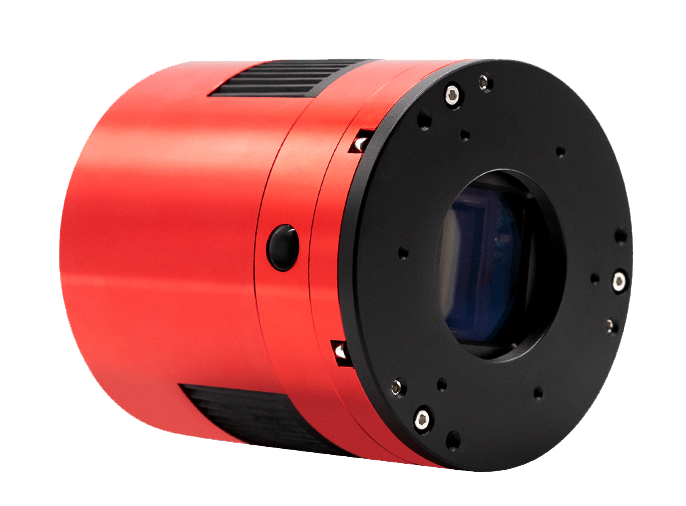
Specifications:

  • Resolution 6248×4176 pixels. That yields very, very impressive 86" x 58" photographs. That high resolution is only possible during *very* clear/stable seeing. So far we have achieved that level of "seeing" only once. Having said that however, dropping the resolution down to even 25% yields stunning 11" x 17" pictures!

  • B & W Images allow for increased depth. Each pixel on our computer monitor screens typically need 24 bits to set color values (8 bits for Red, 8 bits for Green and 8 bits for Blue). By working only in black and white, we can use more bits to record more depth in fine lines and features of our photos. We use filters (described below) to allow only certain colored photons into our camera and then use Photoshop to colorize the photos-- Just like NASA does with the Hubble and James Webb Space Telescopes!
  • Electronically cooled -- typically we set this at -10 C to help cut down signal noise

  • Using our hydrogen alpha (Hα) narrow band filter, this camera achieves a remarkable 92% quantum efficiency. That means the camera can process 92% of all the photons falling on the chip.

  • We control exposure times from tiny fractions of a second up to an hour or more. For practical reasons we typically take 5, 10 or 15 minute exposures and then "stack" those pictures to make longer exposures. (If we try to run really long exposures at once, we run the risk of clouds, jet or satellite trails, fog or other issues that render the image useless.)

  • We also set the gain (similar to the volume on an audio amplifier) to various levels-- we typically use a gain of 100 for DSO observing, which is fairly low.

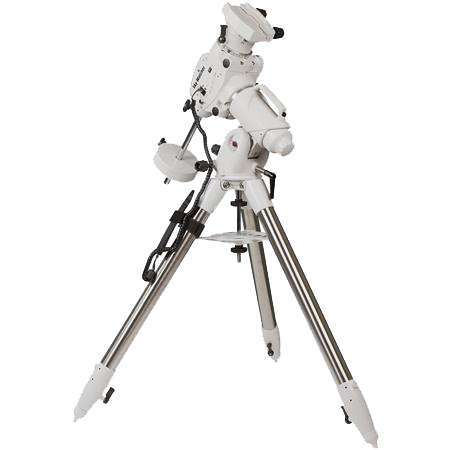
The Skywatcher EQ6-R PRO Mount

Our telescope and camera require extremely precise tracking to keep up with the rotation of the Earth very, very exactly.

This mount does that.

Working together with the guide camera (below) and the associated Phd2 tracking software, this mount can limit the 'drift' of the image in our exposures to around 1 pixel in an hour's worth of exposure (keep in mind, the camera is over 6400 pixels in width). Which is around 1/100th of 1%.

Pretty amazing.

That sort of precision on a clear night with stable air above yields absolutely incredible pictures.

The mount is controlled by the open Source ASCOM software.


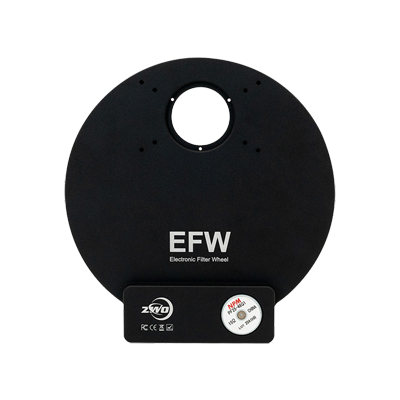
ZWO 7 Position 2" Filter Wheel

  • The filter wheel allows us to seamlessly switch between various different wavelengths of light. Because our camera takes black and white pictures, it is important that we only allow a particular color of light into the camera. By using a hydrogen alpha filter, for example, we only allow a narrow range of very bright RED light onto the camera. We then use Photoshop to make that red light, well, red!
  • Includes Hα, SII, OIII, Visible (L) , Visible (Red), Visible (Green), Visible (Blue) filters
  • We typically use a slightly unusual palette to make RGB images when we are shooting nebulae: , SII, OIII.

    • Hydrogen alpha gives off a brilliant red light and is the most common emission line. We choose to leave it red.

    • SII comes from singly ionized sulfur atoms. Although it is a deeper color of red, we usually choose to make it green.

    • Doubly ionized oxygen is sort of turquoise-ish and we usually choose to make it blue

    • When we want color images in the broader visible spectrum, we have red, green and blue broad band filters, but we rarely use those.

ZWO ASI120 mm HD Guide Camera

Our system requires very, very precise tracking to maintain the stable platform to allow our camera to capture the astounding number of photons that it does.

One of our tools for maintaining a precise "lock" on an image is this small hd guiding scope.

Utilizing the Phd2 software, we "lock" the hd camera onto a guide star and the software sends commands which move the telescope mount in fractions of a pixel (remember, the camera is over 6400 pixels in width!) every 2 seconds for the duration of the exposure.

FocusLynx QuickSync FTX-20 Auto Focuser
Viewing conditions almost always change during the course of an observation. Temperature fluctuations, changes to air stability caused by wind or rising air caused by the Earth giving off heat at night are all situations that can cause an object to go slightly out of focus.

The autofocuser automatically makes minute adjustments to the telescope tube-- moving it in small increments forwards or backwards which changes the focal length, and therefore the focus, of the telescope.

The FocusLynx auto focuser is controlled by our SharpCap software.


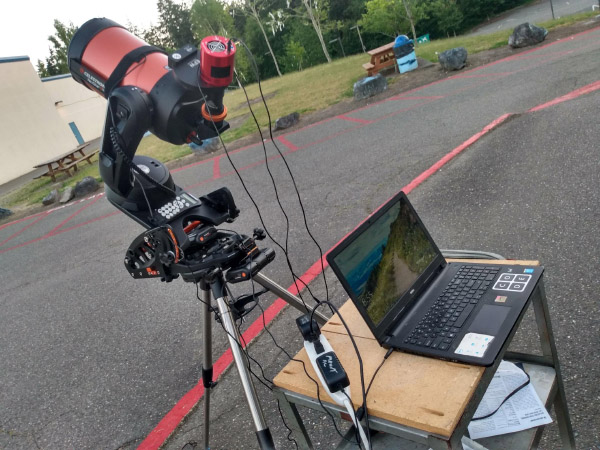
Celestron 8" NextStar 8SE

Ash & Mr W are currently work to configure this telescope for planetary and solar observations.

EQUIPMENT LIST:

Mr W and our Planetary Lead Ash have struggled mightily to repurpose this telescope for lunar and especially solar viewing. It is kind of counter-intuitive but it is hard to actually find the sun in the daytime. The finder scope works but going blind while spotting the sun isn't a very good option.

We have successfully polar-aligned the telescope at night and marked the viewing area appropriately. Our next steps will involve taking the Celestron out in the daytime and utilize the planetary camera for solar viewing. Which is by way of saying we have a lot of work left to do!

A former student used this telescope to show that a "backyard" telescope could be used for exo-planet research. It was a huge, huge lift (which is to say a massive amount of work) and we are now working diligently to turn this into our preferred device for viewing the moon and especially the sun.

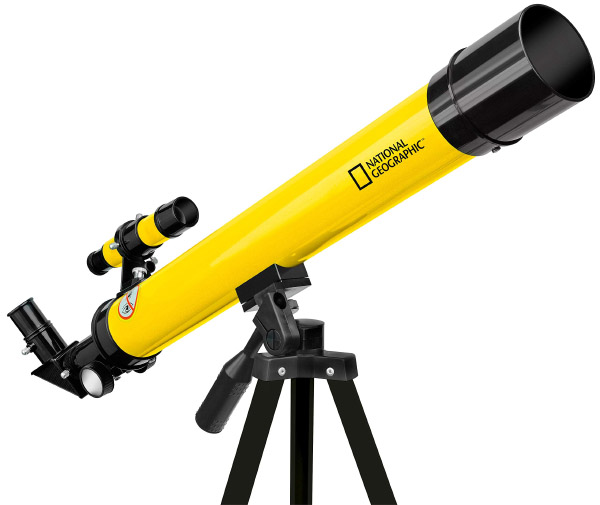
National Geographic 2" Solar Telescope

I bought this little jewel for the 2017 solar eclipse down in Oregon. If you ever get a chance to see a solar eclipse, by all means go!!

Don't worry about pictures though, most cameras just can't take pictures of the sun, even during an eclipse-- best to follow the advice I read in Scientific American: Find a rural area and watch how the scenery changes.

It is epic!

Celestron 4"

Although we are not currently using this telescope, we are planning to change the configuration to allow students to place their cell phones directly on the telescope and take pictures of bright celestial objects such as the moon, Jupiter, Saturn, the Orion Nebula and the Andromeda galaxy.